

An elevated cat bowl lifts food and water a few inches off the floor, so your cat can eat without crouching low. It is a small change, and many cat owners wonder whether it really makes a difference.
The short answer: some cats benefit a lot, many simply prefer it, and no bowl replaces a vet visit when mealtime goes wrong. Here is how to tell if a raised feeder suits your cat, and how to set one up well.
Is an Elevated Cat Bowl a Good Idea?
For many healthy adult cats, bowl height is mostly a matter of comfort and preference. There is little research showing that raised bowls are better for every cat. What vets do agree on is that a comfortable, calm mealtime matters.
The simplest test is to watch your cat. If they hunch low over the bowl, shift their front paws often, walk away mid-meal or push food out onto the floor, a little extra height is worth trying.
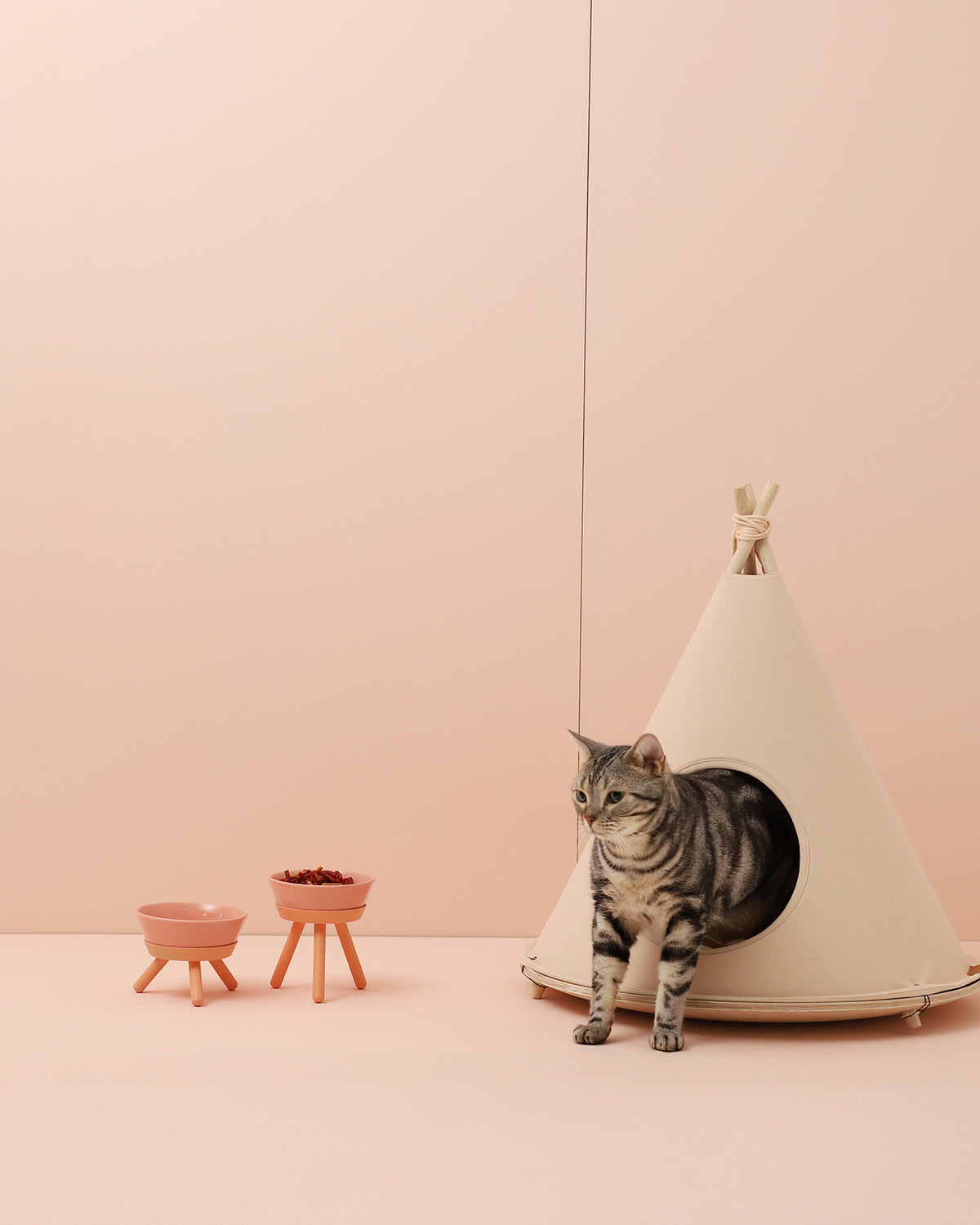
Which Cats Benefit Most From a Raised Feeder
- Senior cats: Older cats often have stiffer joints, so less bending can make meals easier.
- Cats with arthritis or neck discomfort: If your vet has diagnosed joint pain, ask whether a raised bowl could help as part of their care.
- Cats with special feeding needs: Some medical conditions call for eating in a more upright position. Follow your vet's guidance on height.
- Messy eaters: A stable feeder on a mat keeps kibble in one place instead of across the kitchen floor.
How to Choose Feeder Height and Bowl Width
There is no single correct height. Your cat's head should stay comfortable and slightly lowered while eating, with no deep crouch and no stretching up. A bit of trial and error is normal.
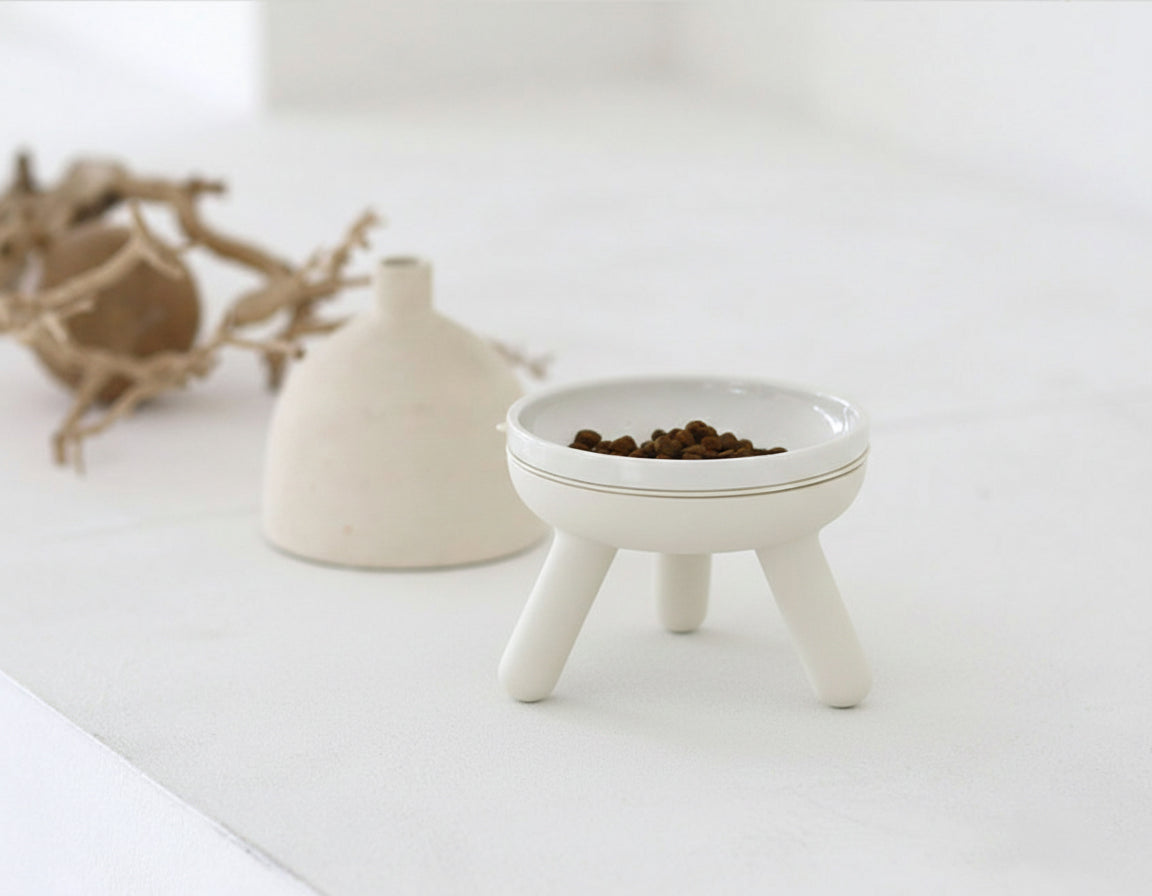
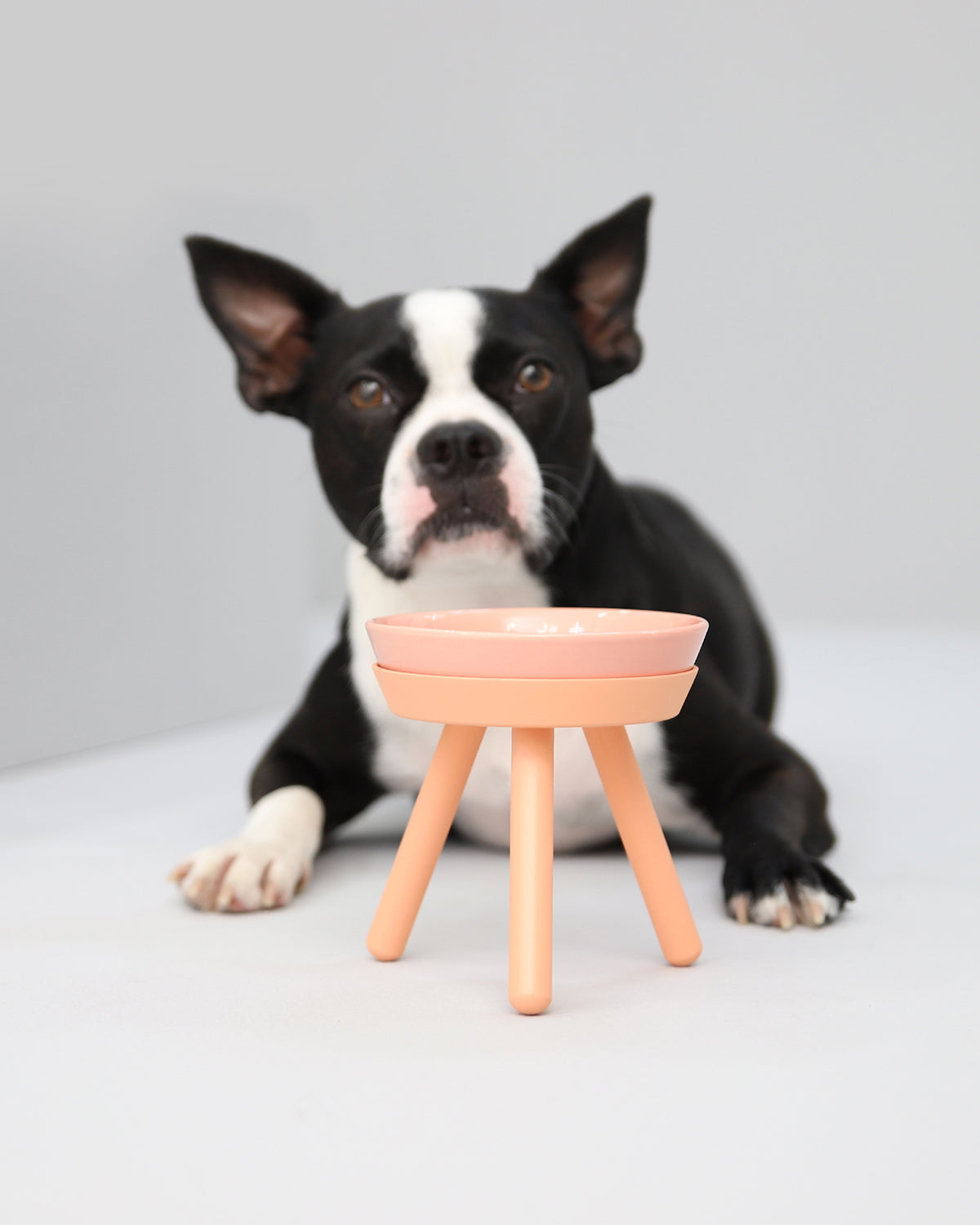
The Oreo Elevated Pet Feeder Table in Pink comes in the Tall height, about 5.9 inches in total with a 14 oz porcelain bowl on a curved steel frame. The Easy Oreo Elevated Pet Feeder Table in Cream comes in Short (about 4.6 inches in total) and Tall (about 5.6 inches), with a 10 oz ceramic bowl and a stable three-leg stand. Both are made for cats and toy or small breed dogs.
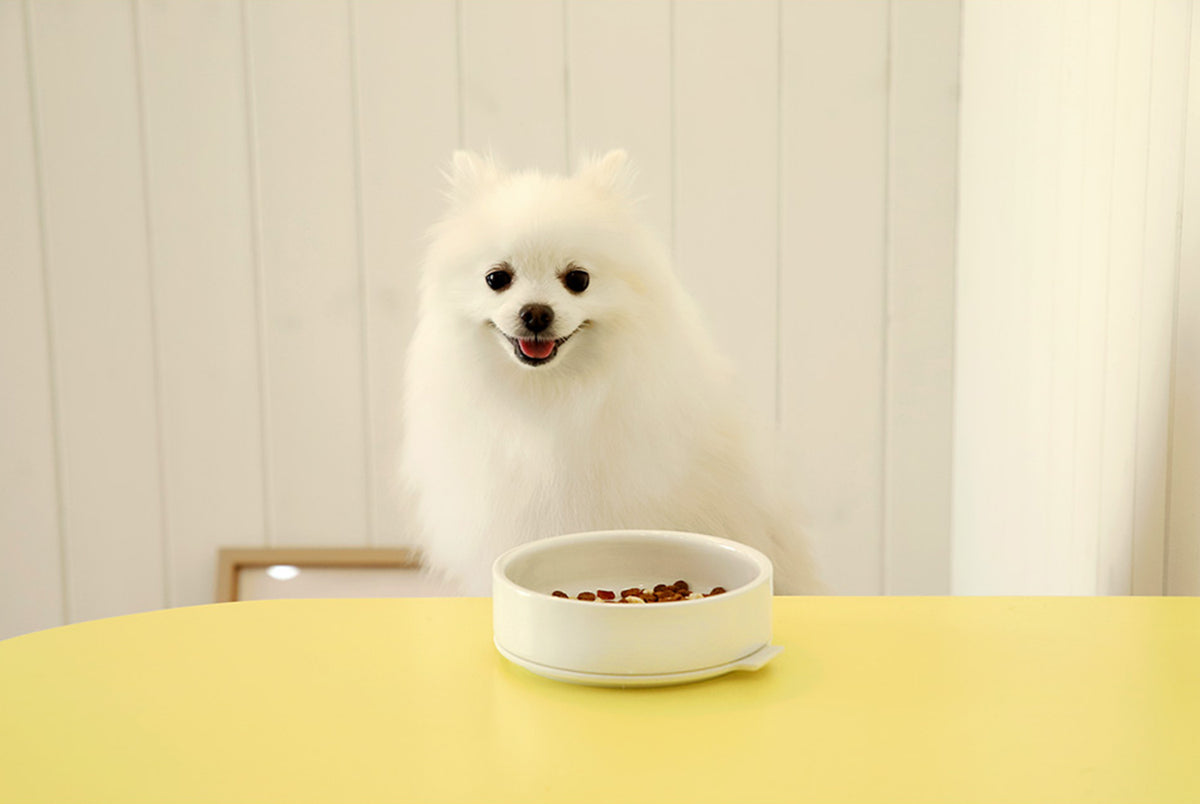
Width matters too. Many cats seem happiest with a wide, shallow bowl, where their whiskers do not brush the sides. The Pudding Pet Bowl is 5.5 inches wide and comes in Small (8 oz) and Medium (17 oz), so you can match the size to your cat's portions.
Vomiting After Meals? Call Your Vet First
Raised bowls are sometimes described as a fix for vomiting. Vomiting, regurgitation or a sudden change in appetite usually has an underlying cause, so it needs a vet visit, not just a new bowl.
Call your vet if your cat vomits more than occasionally, skips meals for a day, loses weight, drools, paws at their mouth or seems to struggle to swallow. Your vet may suggest a raised bowl as part of a wider plan, along with diet or other changes.
Keep It Clean: Ceramic Bowls and a Wipeable Mat
Hygiene matters as much as height. Ceramic and porcelain bowls are easier to keep clean than plastic, which scratches over time. Wash food bowls daily, or after every meal with wet food, and refresh water at least once a day.
The Oreo table's porcelain bowl and the Pudding Pet Bowl are both dishwasher safe. The Pudding bowl also has a removable non-slip silicone ring that helps keep it from sliding. Set your feeder on the Oreo Pet Mat in Off White, made of FDA-tested silicone with raised edges, and spills wipe away in seconds.
When you bring a new feeder home, place it beside the old bowl for a few days and let your cat choose. Cats like routine, so a slow switch keeps mealtime calm. You can see every height and finish in our Oreo feeder collection.
Shop the post
- Oreo Elevated Pet Feeder Table . Pink (Tall) — $59
- Easy Oreo Elevated Pet Feeder Table . Cream (Short or Tall) — $62
- Pudding Pet Bowl . White (Small or Medium) — from $18
- Oreo Pet Mat . Off White — $26
Enjoy free shipping on orders over $75 to the continental U.S. on most items.