

The first cold mornings of November make walks feel brisk and short. It is a good moment to look at the gear your dog wears every day, starting with what sits around the neck.
For small dogs, and for any dog that pulls, the choice between a collar and a harness is more than style. It shapes where pressure lands each time the leash goes tight. Here is a simple guide to protecting your dog's neck, getting the fit right and knowing when to call the vet.
Why neck pressure matters
A dog's windpipe, or trachea, runs along the front of the neck, just under the skin. When a dog lunges on a collar, the leash pulls that pressure straight onto this area.
Many vets suggest a harness for toy and small breeds, for dogs that pull, and for dogs with breathing, airway or neck concerns. A harness spreads the force across the chest and shoulders instead of one narrow band at the throat.
That does not make collars bad. It simply means a collar is best for carrying ID, while a harness does the work of walking.
Choosing a harness for a dog that pulls
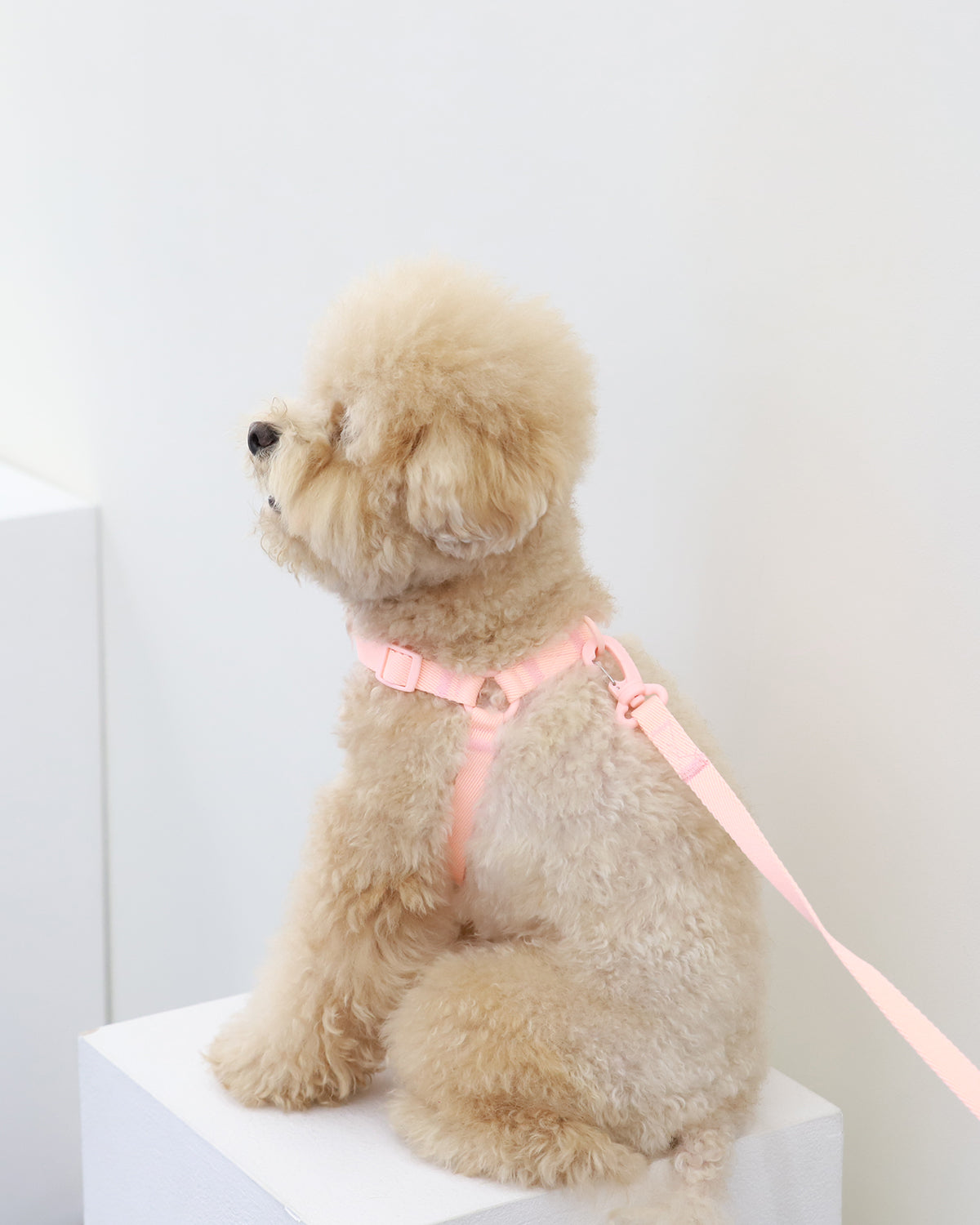
A front-clip harness attaches the leash at the chest. When your dog surges ahead, the clip gently turns them back toward you, which makes pulling less rewarding.
Our Macaron No Pull Dog Harness . Pink uses this front-control design, with soft, lightweight nylon webbing, silicone and metal hardware. It comes in S, M and L.
A no-pull harness is a tool, not a cure. Pair it with short, positive training sessions, and reward your dog for walking on a loose leash.
How to fit a harness and collar
Fit matters as much as the gear itself. A loose harness can slip off. A tight one can rub under the legs.
- Measure two places: the front, around the lower neck and upper chest, and the widest part of the chest. Choose the size where both fall within the range.
- Use the two-finger rule: you should be able to slide two fingers flat under every strap, and under the collar.
- Check the armpits: straps should not sit tight behind the front legs, where rubbing often starts.
- Refit in winter: a sweater or coat underneath changes the fit, so loosen and recheck before you head out.
Once a week, run your hands along the strap lines. Look for redness, thinning fur or sore spots, especially after wet walks.
Keep a light collar for ID tags
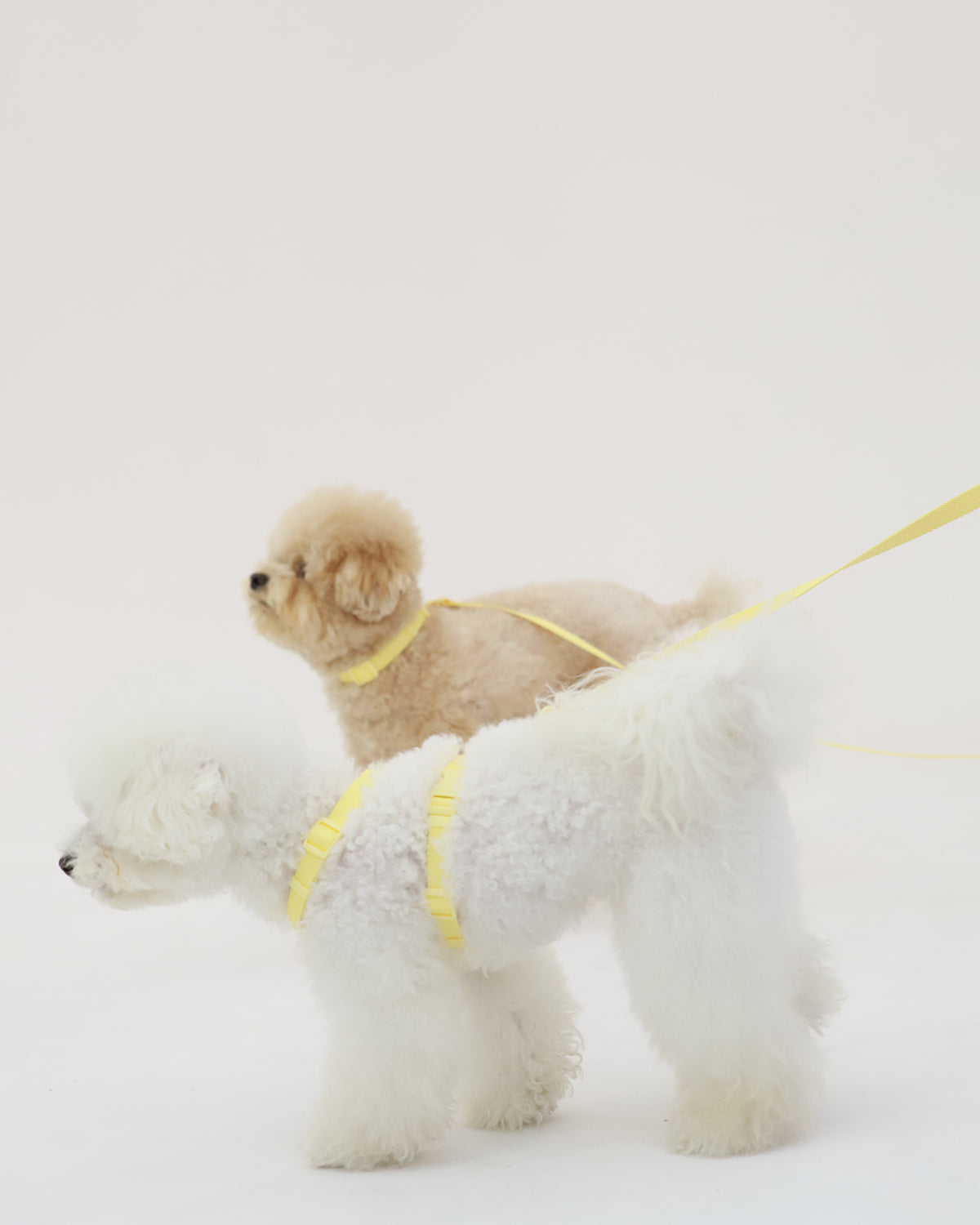
Even if you walk on a harness, a well-fitted collar is the easiest place for an ID tag. If your dog ever slips out the door, a tag with your phone number helps them get home fast. Keep your dog's microchip details up to date too.
The Macaron Collar . Lemon is made with sturdy nylon webbing and a silicone buckle for easy handling. It comes in S, M and L. Clip the leash to the harness, and let the collar simply hold the tag.
Make the leash work with you
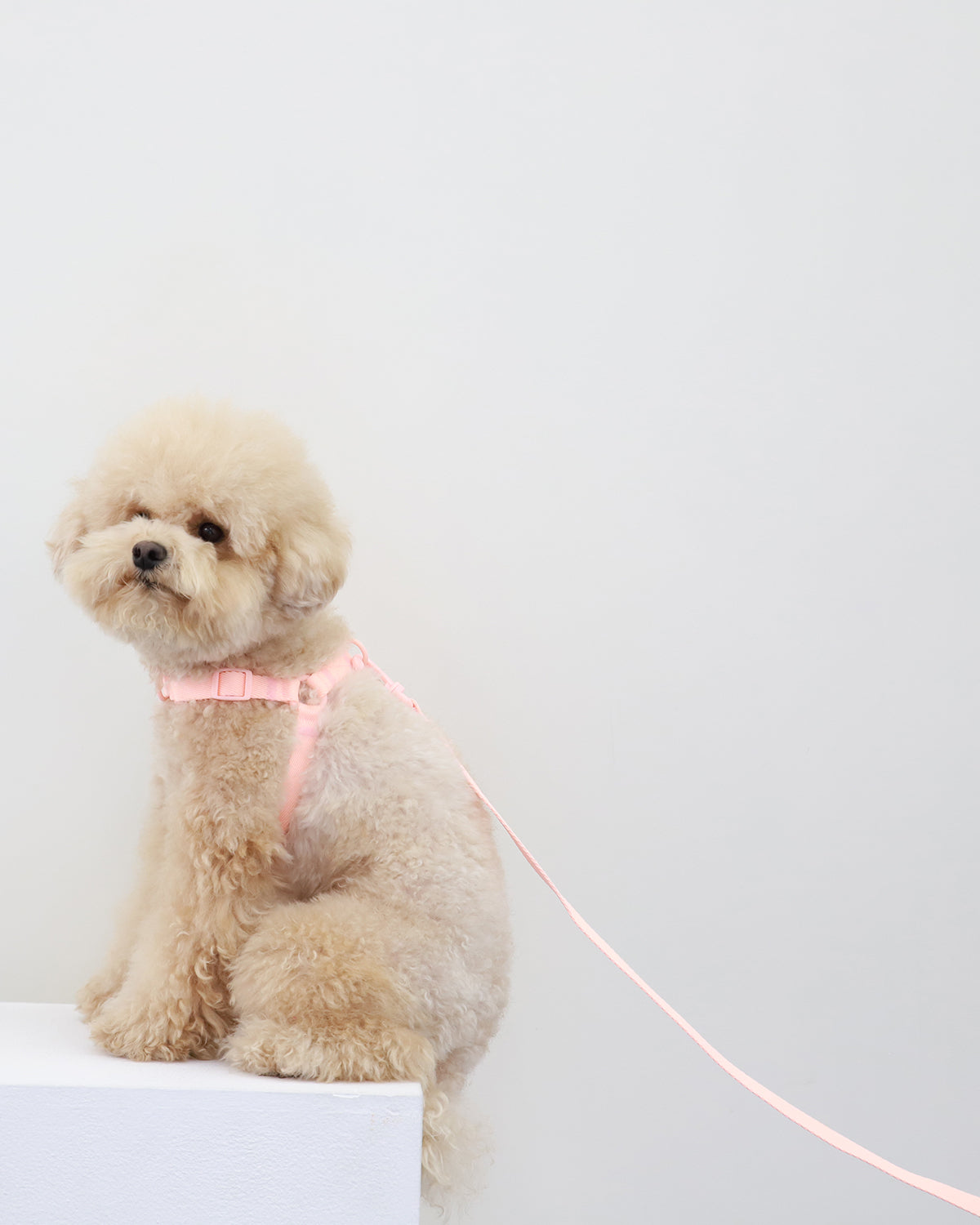
Short, sudden jerks on the leash add strain, whatever your dog wears. A steady, relaxed leash and a calm pace are kinder on the neck and shoulders.
The Macaron Hands Free Leash . Pink can be worn around your waist or across your shoulder, or held in the hand. Its lightweight nylon webbing and plastic buckle make the length easy to adjust. With your hands free for coffee, keys or treats, it is easier to reward good walking.
When to call your vet
Some signs need a professional look rather than new gear. Call your vet if your dog has:
- A honking or goose-like cough, or coughing when the leash pulls.
- Noisy breathing, gagging or trouble catching their breath after mild activity.
- Neck pain, a stiff head carriage or a reluctance to lower their head.
- Sores, hair loss or swelling where straps sit.
Small breeds and senior dogs can be more prone to airway and neck problems. Your vet can check what is going on and suggest the safest setup for your dog.
Shop the post
- Macaron No Pull Dog Harness . Pink — $25
- Macaron Collar . Lemon — $24
- Macaron Hands Free Leash . Pink — from $24
Browse more leashes, collars and harnesses in our Walk collection. Enjoy free shipping on orders over $75 to the continental U.S. on most items.